
World Environment Day 2026: A Yogic Call to Wonder
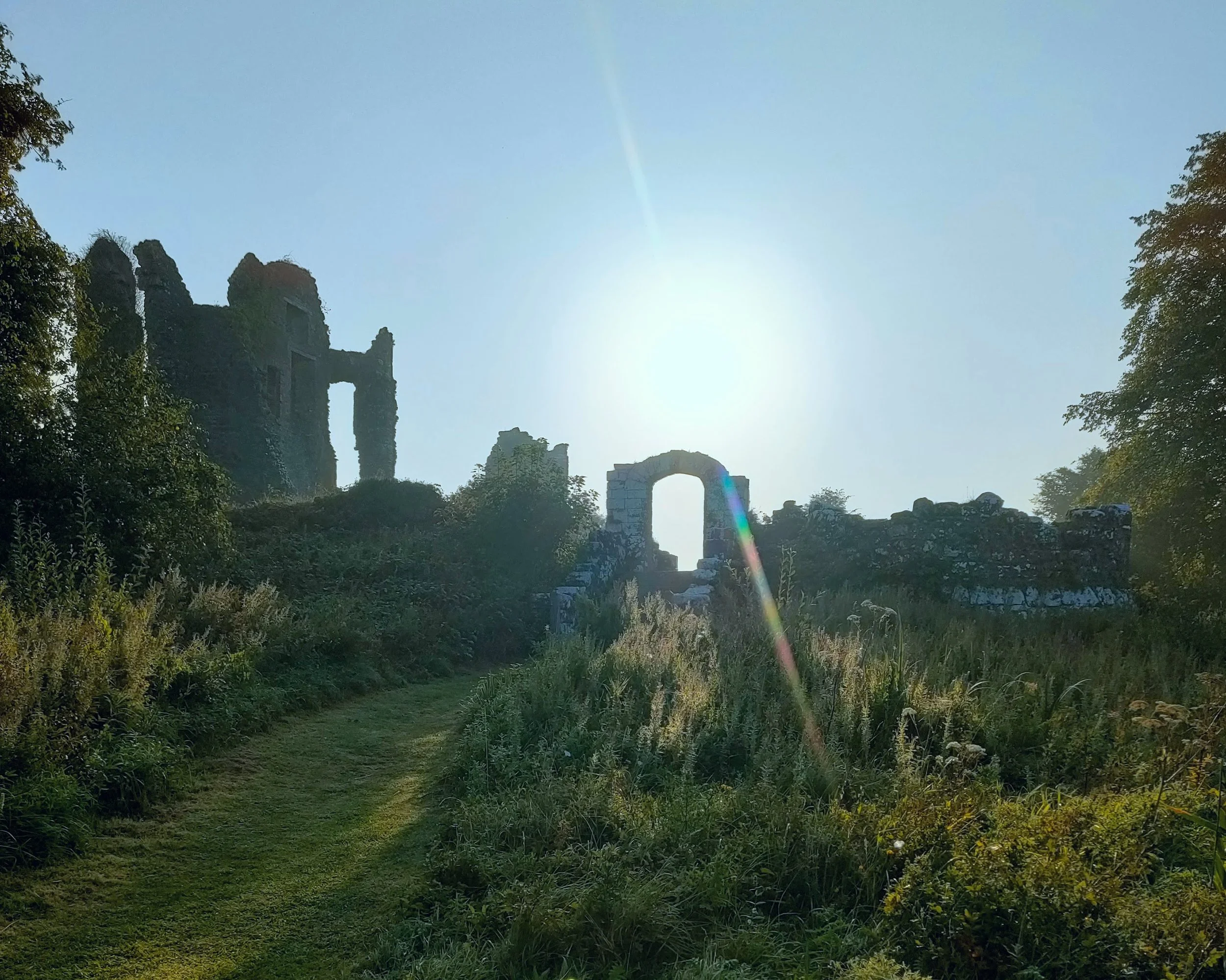
Image by Suzanne Greenwood
On World Environment Day 5th June 2026, the global community ostensibly united under the theme of ‘Climate Action’ and support for ‘World Heritage Sites’ as ‘strategic assets’ and ‘living laboratories.’ But what does any of that even mean and what is missing when we separate the elements from ourselves and see the world as not-self? This article invites us to look beyond worthy slogans, environmental policies, and technological solutions toward a deeper, recurring question: What is our relationship with home? As we breathe breath into and out of our cells, the environment is intensively part of us in every moment and doesn’t just begin and end at the edges of our skin. If action is all that is required to protect our environment, and if this action is so important, why is it that we are doing so much in the opposite direction?
From a yogic perspective, the environmental crisis is not merely an ecological challenge; it is a crisis of consciousness. Yoga teaches that all life is interconnected. The ancient principle of ahimsa (nonviolence) reminds us that harm inflicted upon nature ultimately returns to question our conceptions and experience of humanity. The forests, rivers, mountains, oceans, and ecological and cultural landscapes protected as ‘World Heritage sites’ are not separate from us—they are expressions of the same prana, (aliveness, chi/qi, life force energy and many other storied names) which flows through our core and sparks us into being.
The recent UNESCO report, People and Nature in UNESCO-designated Sites: Global and Local Contributions (April 2026), makes for interesting reading. It tells us that,
‘World Heritage sites, Biosphere Reserves, and Global Geoparks form a unique global network of more than 2,260 sites across over 13 million km².’
They support the livelihoods of some 900 million people worldwide - around 10% of the global population, including many Indigenous Peoples and local communities. They harbour
‘a significant share of global biodiversity and their careful stewardship contributes to climate regulation. Collectively, they store an estimated 240 gigatons of carbon - equivalent to nearly two decades of current global emissions if released. Their forests alone account for around 15% of the carbon absorbed by forests worldwide each year.’
The designation of these ‘living landscapes’ as important and their careful local stewardship over generations has produced a
‘resilient model in which human well-being and environmental protection advance together, and offer practical, place-based responses to the intertwined challenges of climate change and biodiversity loss. Within these landscapes…monitored wildlife populations have remained stable on average, in stark contrast to the 73% global decline in monitored species since 1970.’
But the report also warns that these places are under increasing strain.
‘Nearly 90% of UNESCO-designated sites currently face high levels of environmental stress, while climate-related hazards have increased by 40% over the past decade. More than one in four sites could reach critical tipping points by 2050, with potentially irreversible consequences.’
Meanwhile,while around 80% of national biodiversity plans include UNESCO sites, only 5% of national climate plans even mention them.
Yet the report also offers hope: Every 1°C of warming avoided could halve the number of sites exposed to major disruption by the end of the century. This insight echoes the yogic understanding that insight, intention and small conscious actions, practised consistently, create profound change.
UNESCO's reaffirmation of the importance of World Heritage on World Environment Day highlights a truth long recognised by yogic wisdom: protecting heritage, protecting life and protecting the environment are inseparable. But these are so much more than ‘assets’ or investment opportunities and beg questions as to why more of the earth is not reverenced. Sacred natural sites, ancient cities, coral reefs, glaciers, and ecosystems are more than physical locations in time and space. They carry collective memory, spiritual resonance, and ecological intelligence accumulated over millennia.
Climate change is visible in signs across the planet: in the air we breathe, in the rise in autoimmune diseases and cancer increasing in our bodies, and the earth and sky that we bridge in our lifetimes. Coral reefs are bleaching and dying as ocean temperatures rise. Glaciers that have tempered the tides for millennia are melting. Droughts, floods, and wildfires increasingly threaten ecosystems and all our cultural treasures. These changes are not isolated events; they are symptoms of an imbalance in humanity's relationship with nature, with ourselves.
Yoga reflects the importance of balance as harmony within, among and between inner and outer worlds. When greed, dissociation, overconsumption, and disregard for natural limits dominate human behaviour, these are symptoms of us being lost on the inside and systemic ecological imbalance follows. The ‘climate crisis’ is a sanitised and dissociative way of naming our loss. It calls insufficiently clearly for external action (but what, after all, is truly external). It misses the need for inner transformation, for recognising sustainable living begins with a recognition that there’s only one of us here.
The yogic path encourages simplicity, moderation, and reverence for life. Through conscious consumption, responsible kinship, and cultivation of what ecological awareness does and could mean, our interbeing can contribute to the collective healing of the planet. Climate action is not only a scientific or political responsibility—it signals the need for a biopsychosocioecospiritual practice grounded in compassion and responsibility.
On World Environment Day, ‘World Heritage sites’ stand as powerful teachers that the whole world is our heritage, our legacy and ourself. They remind us that humanity flourishes when it lives in sacred reciprocity with nature, and declines when it forgets its place within the larger web of life. By protecting the treasures still with us, we honour both our ancestors and future generations.
The Earth does not need saving from us as much as it needs us to rediscover our connection with that from whence we came and to which we are returning every second of every day. In that rediscovery lies the essence of yoga: union between self and nature, action and awareness, humanity as an expression of the living planet.
A yogic understanding of climate action also invites a transformation of perception. From a yogic perspective, World Heritage Sites are more than places of exceptional natural beauty or cultural significance. They are reminders of something we have always known but too often forget: that the boundaries we draw between ourselves and the rest of life are far less certain than we imagine. The clues are everywhere. We can look to sources as diverse as ancient indigenous practices, records of religious transportation, accounts of near death experiences, Aldous Huxley’s reflections in The Doors of Perception, emergent medical research on altered states of consciousnessness or Dachner Keltner’s work on the daily need for awe and wonder; all point to the importance of moments when the boundaries between self and world appear to dissolve. All point to an understanding of the benefits of bigger picture awareness. All point to wonder and remembrance. Such insights resonate with the yogic teaching that separation is an illusion. When we recognise our interconnectedness with all life, environmental protection ceases to be an external duty and becomes an expression of self-awareness.
This perspective is also captured powerfully in the environmentally attuned John Seed’s insight that we are kin with so much more than the modern world allows. We are not merely fighting for the protection of the rainforests; rather, we are the rainforests speaking in defence of themselves. The rivers, oceans, and glaciers are not objects apart from humanity but living communities of which we are every bit as inseparable as the water droplets in the waves. To harm them is to diminish ourselves; to protect them is to participate in the flourishing of life.
The poet Camille T. Dungy, in her poem Characteristics of Life, also explores the dissolution of boundaries, the embrace of vulnerability, and a fluid alignment with life's natural currents. She reminds us that life's richness emerges through reflecting more fully on who and what and how we are speaking for. Climate action, therefore, is not simply about preventing loss or protecting valuable resources; it is about nurturing the conditions under which life in all its diverse forms can continue to flourish together in the cyclical ways that make most sense and allow us to discover most love.
From this yogic perspective, World Heritage Sites are more than places of outstanding natural beauty or value. They are reminders of the profound unity that links culture and nature, past and future, humanity and Earth. What appears as a forest, a river, or a landscape is no longer merely a resource, backdrop or asset, but a living community of relationships. Wonder is assisted by daily practice of meditation to expand not only what we feel, but what we know and how we know it. The gentler inhabitation of all that life offers us is both an ecological necessity and a spiritual responsibility. It returns us yet again to the practice of Ramana Maharshi ‘Who am I?’ It returns us yet again to that core niyama in Patanjali's Yoga Sutras, Ishvara Pranidhana, inviting fuller surrender into wonder and engagement with a higher flow, sacred power and cosmic unfolding.
Mary O’Rawe
