
Cultivating Spaciousness
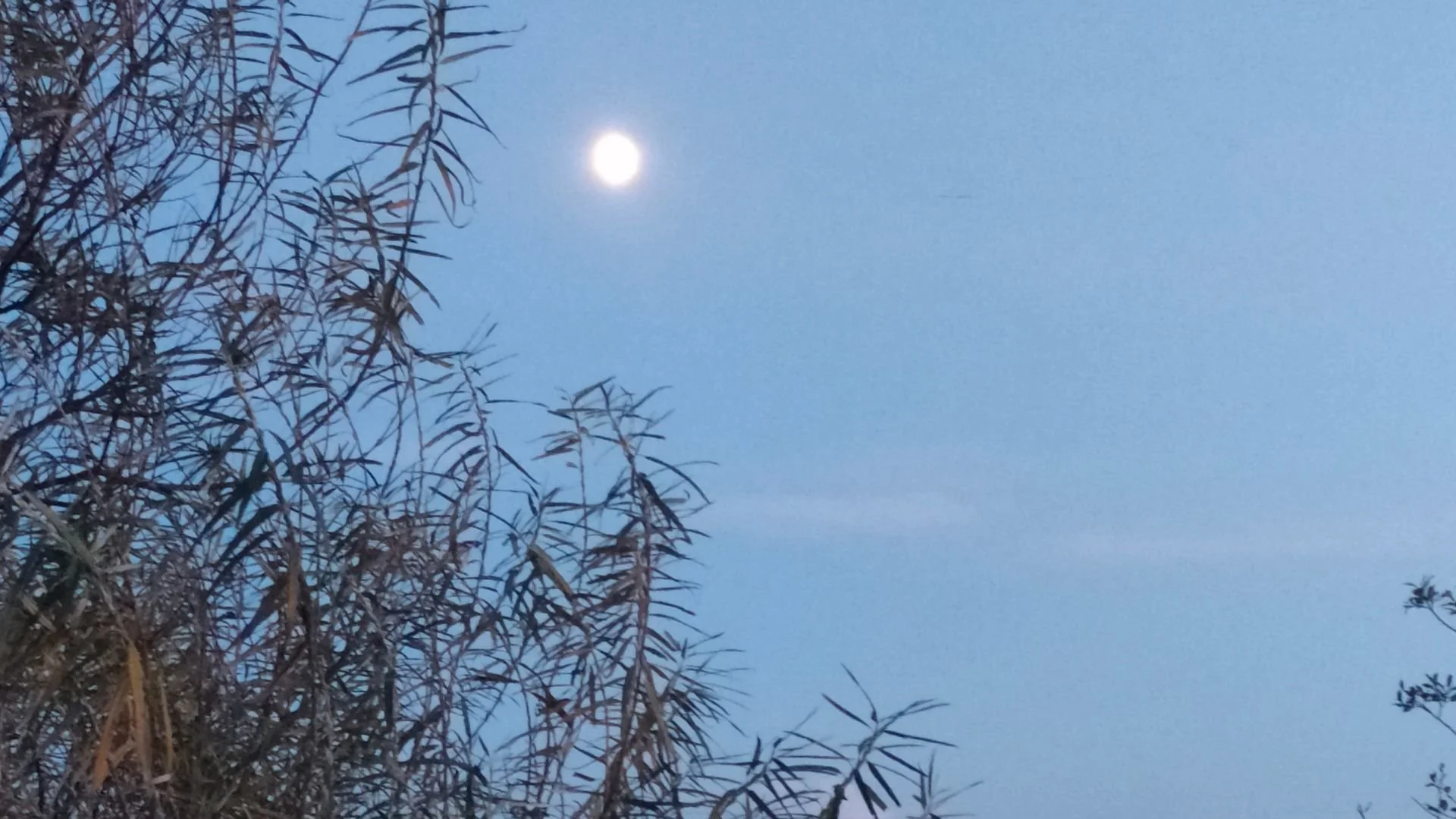
“The true meditator simply rests within the uncontrived freshness that lies at the essence of mental activity. Grant your blessing that there may be freedom from the notion of something to meditate on”.
Daily Refuge Prayer to Vajradhara
Don’t mistake the finger for the moon
Lately I have been thinking about the expression ‘not seeing the wood for the trees’. There is a lot of wisdom in that saying, and it can be applied to the practice of Yoga as much as anything else. It struck me that over-reliance on practice can sometimes be an obstacle in itself and may perhaps cause us to miss the point entirely. The old Zen saying about giving attention to the finger pointing at the moon, rather than the moon itself, springs to mind.
Try, but know when to let go of trying
We have all done it: become obsessed with our particular practice, or toolkit of special techniques, and the goal which, by our very own efforts, by hook or by crook, we shall achieve. Yes, of course, we need practices and goals - sadhana - is a vital part of Yoga after all. However, Yoga is a middle way, and recommends letting go as much as effort, and there is wisdom in knowing the difference. This middle way is described in an elegant paradox: “Yoga is not to be attained by trying, neither is it to be attained by not trying”. So, there should be a balance.
Allow space for Grace
When we rely entirely on our own efforts and techniques, we close ourselves off from the precious gift of Grace. All the great yogis humbly acknowledged their limitations and beseeched the Higher Powers for Grace (Kripa/Graha. Grace comes either as a pure gift, where no effort is required, or as a complement to effort. The first is called “the way of the kitten”, because of the way that a kitten makes no effort, but is carried in the mouth of the mother; the second is known as “the way of the monkey”, because the baby monkey does make effort- in that it hooks its arm around the neck of the mother while being carried. Either way, space is left for Grace.
I am not the doer
When we depend too much on our own efforts, we inflate the ego. “I will do it my way!” “I will stretch my way to Heaven!” After all, the Bhagavad Gita teaches us to put the ego in its place - not to reject it but to place it under the guidance of the Self. The Sanskrit word for ego is ahamkara, which means, significantly, ‘I am the doer’. Yoga aims to awaken you to the realisation that ultimately it is not all in your hands: you are not the doer: “Naham-Karta”.
Who am I, anyway?
What does “I am not the doer” actually mean? It means different things on different levels. In Vedanta, it is the recognition that there is only the Self, and ultimately the ego has no power of causal agency. In fact, the Advaitic (non-dualistic) philosophy denies the very existence of the ego. In Gyana Yoga (the Yoga of Wisdom) there is a practice called Atma Vichara. It involves continuous meditation on the question “Who am I?” Bit by bit, the ego dissolves and space is created for the full expression of the Self.
Renounce the fruit of action and find out who you are
Karma Yoga, which is meditation in action, also begins with the premise ‘I am not the doer’. To bring you to this insight, it recommends that whatever you do, you remain aware and in the moment, without end-gaining. The “doing” is all there is and the doer and the done dissolve. In fact, they all become one, with only the Higher Self “acting”, and yet never acting. This creates a space which takes the ego out of the equation and allows for a sense of the Self as the authentic source of awareness and action. In the words of the Gita, you experience “inaction in the heart of action and action in the heart of inaction”.
This awareness endows you with a spaciousness of vision. In the words of the Gita, you become “the knower of the field”. You come to see that at the heart of the world, with all hustle and bustle, is silence and stillness.
Form is emptiness….`
And not only is there silence in the centre of action, but you realise, with this spaciousness of vision, that everything is pervaded by emptiness. What is without reflects what is within- as described in the Heart Lotus Sutra: “Form is emptiness, Emptiness is form”.
Emptiness is filled with awareness
You also come to realise that this emptiness is not a cold, barren void, but a space filled with awareness and light. This is Shoonya - a fecund womb of creative potential. In Tantric terms, this awareness and light is called Siva; and its vibrating energy, which at each moment creates the world, is called Shakti. The light of awareness which illuminates our mind, and which is brighter than the sun, and which allows the sun to be known, and even to exist, is called Prakash. This light exists in our hearts.
The space within the heart contains the universe
“The little space within the heart is as great as this vast universe. The heavens and earth are there, and the sun, and the moon and the stars; fire and lightning and winds are there; and all that is and all that is not; for the whole universe is in Him and he dwells within our heart”.
Chandogya Upanishad
Cultivate Spaciousness
The craving for a sense of space when the world crowds in on you is the echo of a deep, spiritual need. Space, and the sense of spaciousness, have an innate connection with the higher Awareness we open out to in meditation. However, often we get lost in the object of meditation instead of allowing for another approach, resting in the subjective space of awareness in which the object is contained. That way, we are aware of the background and inner space, in which thoughts are contained, just as objects are contained in external space. We adopt the perspective and field awareness of the ‘knower of the field’ and not the focal awareness of the ego.
“We should consider that in the inner world Brahman is consciousness; and we should consider that in the outer world Brahman is space. These are the two meditations”.
Chandogya Upanishad 3.18.1
Vigyana Bhairava Tantra
All of this is the subject of a Kashmir Shaivite text, called the Vigyana Bhairava Tantra. The text contains many fascinating approaches to meditation which put you in touch with the knower of the field and your own inner spaciousness. It encourages a turnabout in consciousness so that we are aware of the seer rather than the seen. We learn to see through the eyes, not with the eyes.
Many are simple and every day, involving meditations on space because of its correlation with awareness. Thus, you meditate on the space between clouds, between objects, between words, between contrary ideas or paradoxical concepts, between branches and leaves of trees, between the coming and going of thoughts or the turn or retention of the breath; spaces within and outside of objects, and the inner spaces of navel, heart, head and the Sushumna Nadi (the subtle space in the centre of the spinal cord). You cultivate a sense of the in-between, of liminality, which is where Energy (Shakti) merges back into Consciousness (Siva).
These spaces are pregnant pauses indeed, and like the holes in a magical flute, they make music of a mystical resonance.
Get out of your own way
So, let go of effort, step back, be in the moment, reflect on who is the real source of thought and action and become the knower of the field. “Abide in Me”. See the wood, not the trees, or at least the space between the trees. Remember to ask for Grace. And, of course, get out of your own way.
You will discover a space that vibrates with the light of a growing awareness, and realise that under every pebble, and in the centre of every atom, sits a Buddha.
Hari Om Tat Sat
Yogacharya Michael McCann
