
Living gently with the Earth
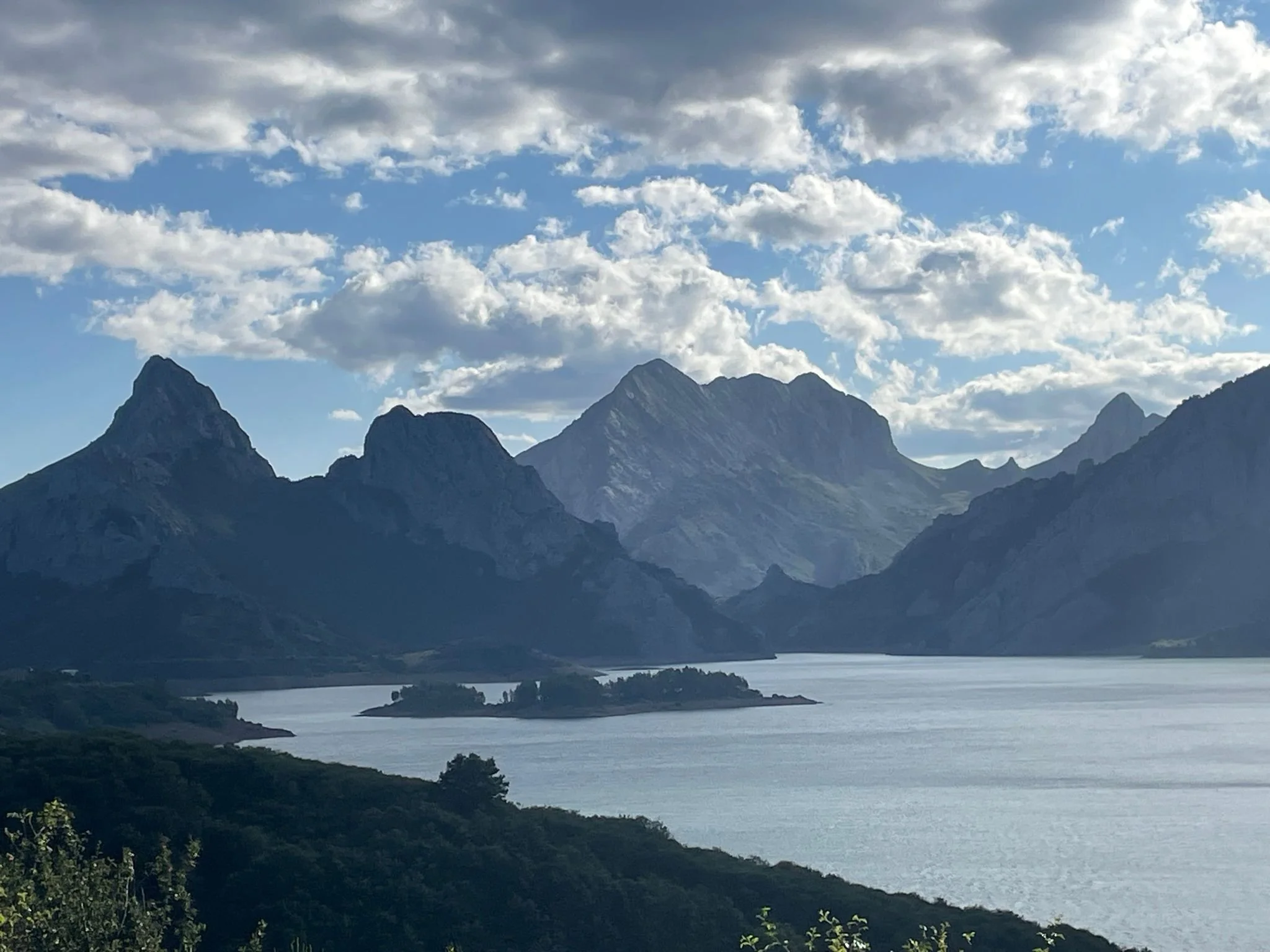
22nd April 2026 marked Earth Day. The theme this year was Our Power, Our Planet. This in itself invites many layers of reflection and provides the opportunity to seed an extra layer of awareness into our yoga practice - every day! Earth Day invites the kind of attention that is less about marking a date and more about remembering a relationship. In yoga, we might recognise this as a return to bhūmi, the ground of being, not only beneath our feet but within our awareness.
There is a growing recognition that the ecological crisis is not separate from a crisis of perception; of having lost our connection to the earth and ourselves somewhere way back. When nature is seen as resource rather than relation, something essential is lost. A yogic lens offers another possibility: that the earth is not an object we move upon, but a living vibrational field we move within, a symbiotic feeding and relationality. Practice, then, becomes a way of restoring participation.
In the stories and reflections of thinkers like Francis Wellar, there is a call to re- sensitise ourselves to the animate world - to listen again to wind, water, and stone as presences rather than backdrops. This echoes the mythopoetic work of Michael Meade, who reminds us that, in times of collective uncertainty, it is often the deeper stories that can ground, root and reorient us in more soulful ways. It’s not the stories of progress or control we need, but those that place us back inside a living cosmos – elemental beings in an elemental universe.
Yoga, at its heart, is a practice of relationship. The Sanskrit root yuj - to yoke, to join - suggests that separation is, at base, an illusion. Yet modern life trains us in fragmentation: body from mind; human from nature; self from community; protective personality from soulful self. On Earth Day, the invitation is to notice where we might soften these divisions, even slightly.
Vanessa Machado de Oliveira speaks to the complexity of our historical moment as we both both hospice and hopefully outgrow modernity. She cautions against quick solutions or the desire to “fix” the world without first understanding and embodying something more of the depth of entanglement we are part of.
This can be uncomfortable. It asks for humility. In yogic terms, it asks for svādhyāya - self-study - not as self-improvement, but as an honest inquiry into who we are and how we are shaped by and implicated in the systems around us.
And then there is the remembering of land itself - not as abstract “environment” but as place, as story, as ancestry. Manchán Magan wrote beautifully of the Irish landscape in a way that brings language, folklore, and ecology back into conversation. There is something deeply yogic in this attentiveness: to walk a place and know it not just geographically, but relationally.
Ruth Allen’s beautiful book Weathering teaches us how there is medicine in understanding how we relate to being in woods or at the edge of water or standing on a mountain top and invites us to explore what can help us heal in recognising what the rocks hold of us and for us.
So what might an Earth Day practice look like?
Perhaps it is slower. Perhaps it begins by feeling the weight of the body supported by the ground - not only physically but also metaphorically, symbolically and energetically. Perhaps it’s in the quiet recognition that every posture is an exchange: gravity and grace; rooting to rise; effort and yielding.
Perhaps it includes stepping outside our studios and practice rooms. Practising beyond a mat, on grass, sand, soil, or stone – even in water. Letting the senses widen. Forest bathing. Soothing our nervous systems with the sounds of nature. Allowing the breath to be influenced by the air as it is. Grounding – wondering if the earth and our other bodies are sicker for how little we walk barefoot.
Perhaps it is less about doing, on a day like today - and more about listening.
There is no single way to respond to this moment. As with the varied ways yoga is taught and shared, there is no one form that fits all. But if yoga offers anything here, it is a way to stay present without turning away from what is happening on the earth, in extractive practices and to the earth as mother. Can we remain grounded enough to feel, and steady enough to remain in relationship? And in that quietness and stillness - might we learn to listen to the land speak?
It can take time – maybe we hear an echo of our own voice or the primordial chant of OM from the stones and the soil, maybe it’s the whisper of wind in trees that touches us - or the warmth of sun on grounded bones…
Maybe we can sit daily and simply ask the earth, ‘What do you need from me today?’
Earth Day, then, is not just a reminder of what is at risk. It is also a reminder of what is still possible: that through attention, care, and practice, we might relearn how to belong. Our power is power with, not power over. Maybe one day we will learn.
Maybe it’s today.
Mary O’Rawe
